A simple, no-panic way to figure out how much water to store for your family — plus how to keep it clean, rotate it, and make more if you run out.
If you’ve ever stood in the water aisle wondering whether one case of bottles is “enough,” you’re asking exactly the right question — and the answer is calmer and more concrete than most prep sites make it sound. Water is the one thing your family can’t go long without, but storing a sensible amount is genuinely easy once you have a number to aim at.
Here’s how to figure out your number, keep the water safe, and make more if you ever need to.
The one rule to remember: a gallon per person, per day
The standard planning figure is one gallon of water per person, per day. That covers drinking plus a little for brushing teeth, taking medications, and basic cleanup. It’s the number every emergency agency uses, and it’s easy to do in your head.
So for a family of four:
- 1 gallon × 4 people = 4 gallons a day.
- A 3-day supply (the classic starting point) = 12 gallons.
- A 2-week supply (a more resilient target) = 56 gallons.
Then add a few honest adjustments:
- Pets. A cat needs very little; a big dog can drink close to what a person does. Add roughly a half to one gallon per day for a medium-to-large dog.
- Hot climates or physical activity. People drink more when it’s hot or when they’re working. Round up.
- Pregnant or nursing family members, and anyone who is sick. These all raise the number.
- Formula-fed babies. You’ll need clean water for mixing on top of everyone else’s share.
Don’t overthink it. Pick a target — most families do great aiming for three days first, then building toward two weeks — and store to that.
How much is realistic to store?
Three days is achievable for anyone in an afternoon. Two weeks takes a little planning, mostly because water is heavy and bulky (a gallon weighs about eight pounds). The trick is choosing the right containers for your space.
- Grab-and-go and small spaces: stackable brick-style jugs tuck into closets and under beds and interlock so they don’t tip. See our roundup of water storage containers, or the WaterBrick Stackable if you want one clean answer.
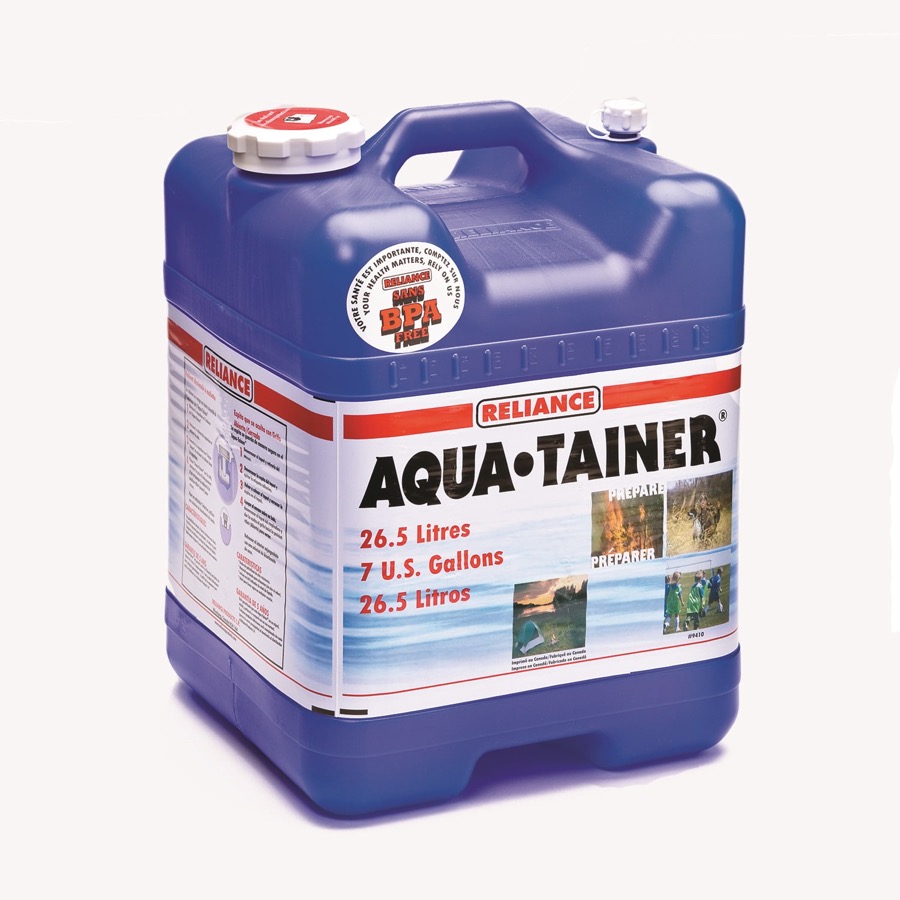
- The garage or a utility room: a rigid 5–7 gallon jug like the Reliance Aqua-Tainer holds a lot per container and has a spigot, which makes daily use painless.
- Everyday bottles count too. A couple of sturdy reusable water bottles per person means everyone has their own during an outage, and they’re useful the other 360 days of the year.
A mix is fine — and honestly better. A few big jugs for volume, some stackable ones for flexible storage, and personal bottles for daily use covers every situation.
Keep it clean: storing and rotating
Stored water doesn’t really “go bad,” but it can pick up a stale taste or, if a container wasn’t clean to start, grow something you don’t want. A few simple habits keep it fresh:
- Use food-grade containers made for water — not old milk jugs, which are hard to fully clean and can break down over time.
- Fill from a safe tap and cap tightly. If you’re storing tap water that’s already treated by your utility, you don’t need to add anything.
- Label the date and rotate roughly every 6–12 months. An easy trick: rotate when the clocks change, the same weekend you check your smoke and carbon monoxide detectors.
- Store cool and dark. Heat and sunlight are what age stored water fastest.
Commercially sealed bottled water is the exception — it keeps for a long time unopened, so it’s a fine no-maintenance option if rotating jugs feels like a chore.
If you run out: making more water safe to drink
This is the part that turns water anxiety into water confidence. Even if your stored supply runs low, you are rarely truly out of options — you just need a way to make questionable water safe. There are two reliable approaches, and it’s smart to have both.
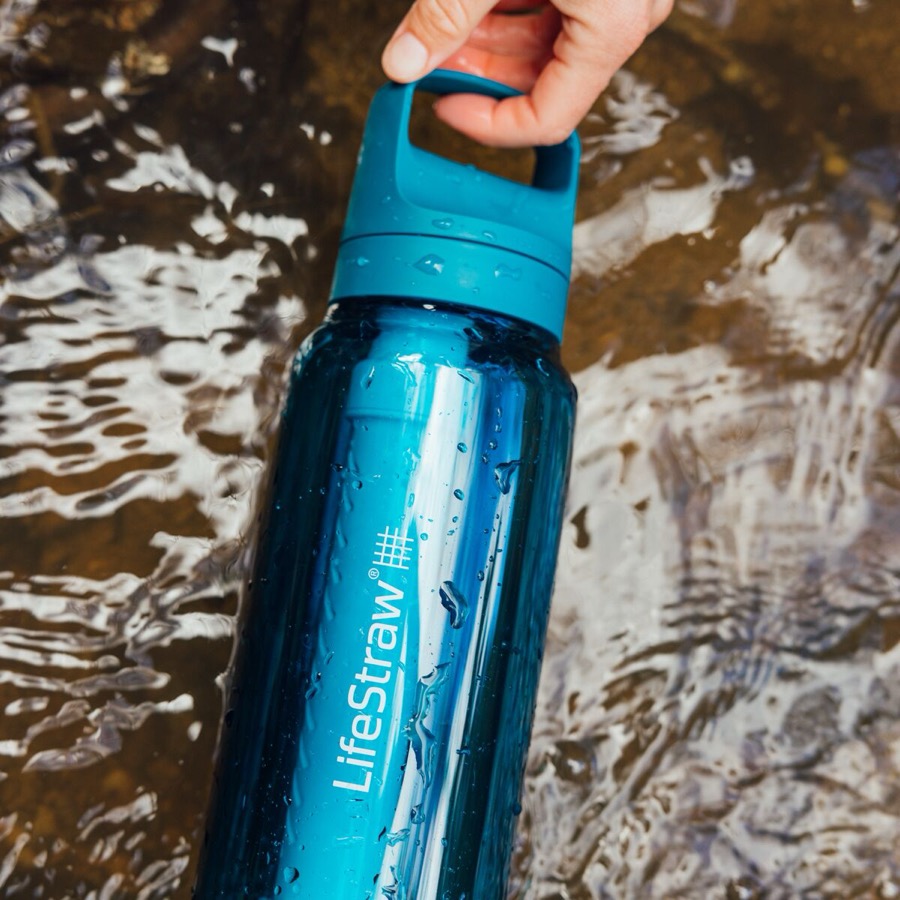
Filtering removes bacteria, protozoa, and sediment, and it’s the easiest for everyday use. A squeeze or bottle-style filter lets you drink straight from a tap, stream, or rain barrel:
- The Sawyer Squeeze is a tiny, inexpensive workhorse the whole family can share.
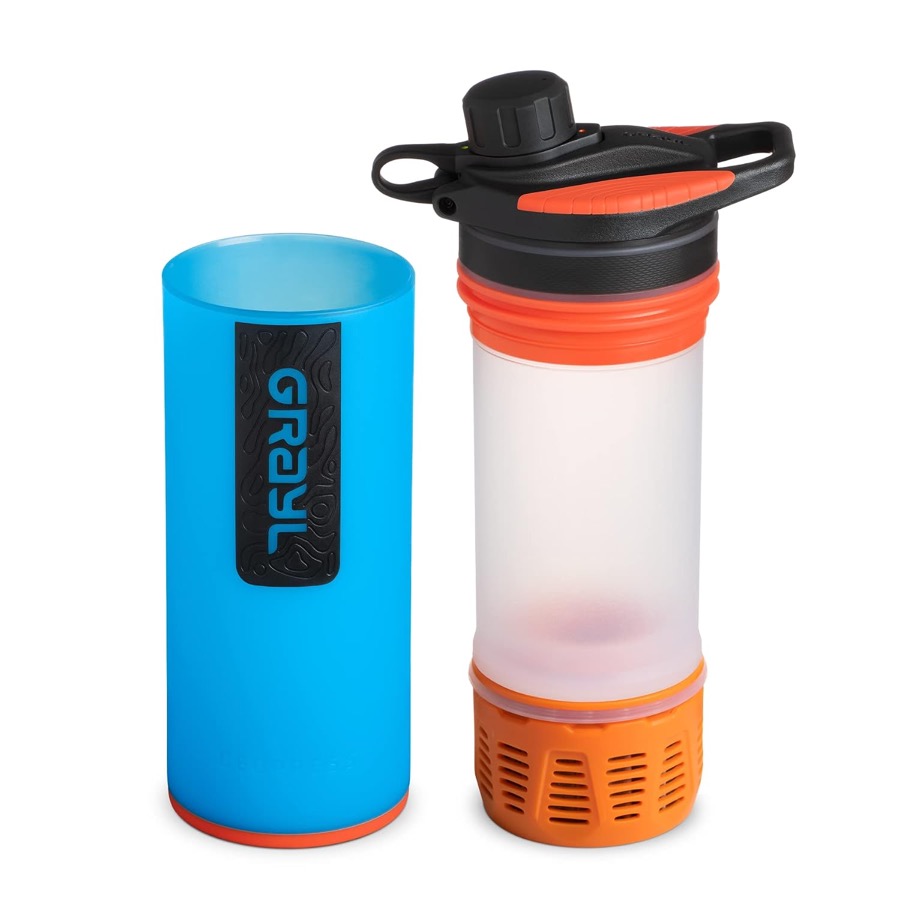
- The Grayl GeoPress works like a French press — press and drink — and handles viruses too, which most simple filters don’t.
See more options in our water filters and purifiers roundup.
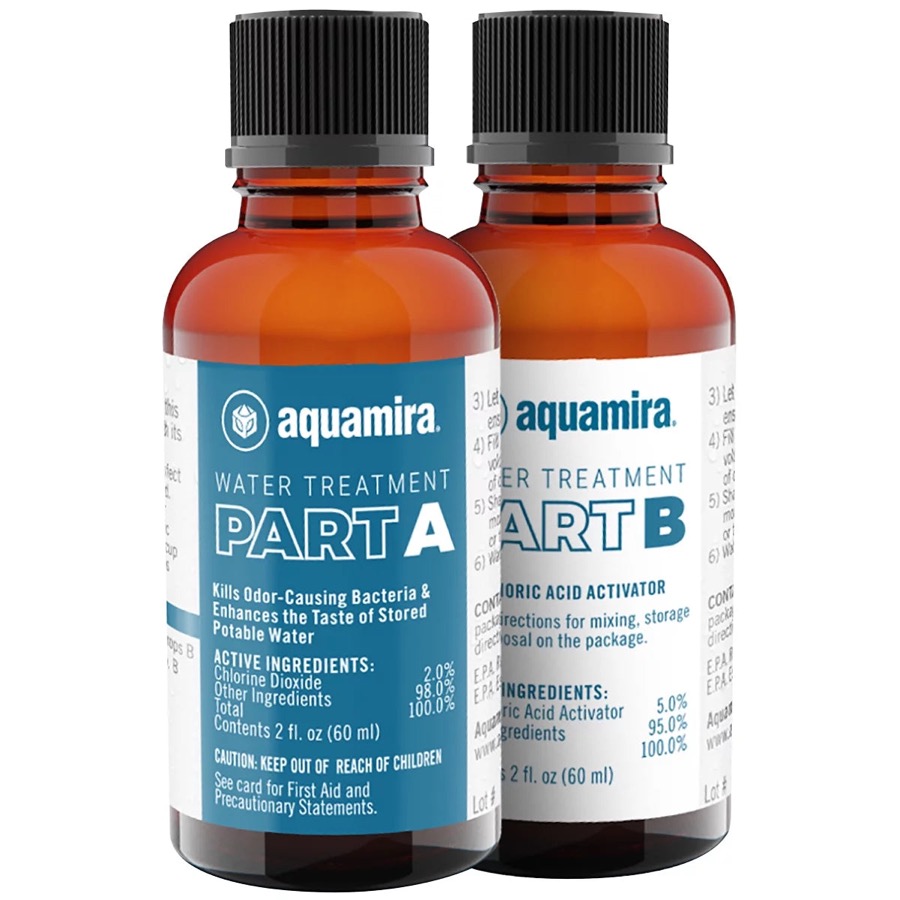
Chemical treatment is your backup to the backup — lightweight, shelf-stable, and perfect to tuck in a go-bag. Purification drops or tablets like Aquamira drops make water safe when filtering isn’t practical. Our water purification tablets roundup covers the rest.
And the simplest method of all: boiling. A rolling boil for one minute (three at high altitude) kills the germs that make people sick. It won’t remove chemical contaminants, but for biological safety it’s foolproof.
A quick word on staying hydrated
In a stressful, hot, or physically demanding situation, plain water is sometimes not quite enough — especially for kids, who get dehydrated faster than adults. Keeping a few electrolyte packets with your supplies helps everyone actually absorb the water they’re drinking, and turns “drink your water” into something kids will happily do.
Your calm next step
You don’t need to solve this all at once. Do the three-day version this week — it’s genuinely one afternoon and a trip to the store — and you’ll have covered the single most important base in family preparedness. Then, whenever it’s convenient, build toward two weeks.
If you’re getting set up for a specific situation, our scenario guides fold water into the bigger picture: a power outage, a hurricane, or a winter storm. But wherever you start, start here. Water first, always — and then you get to stop worrying about it.
By Sunny Supply Co.